
Held in the Dark
Co-regulation in the tank...

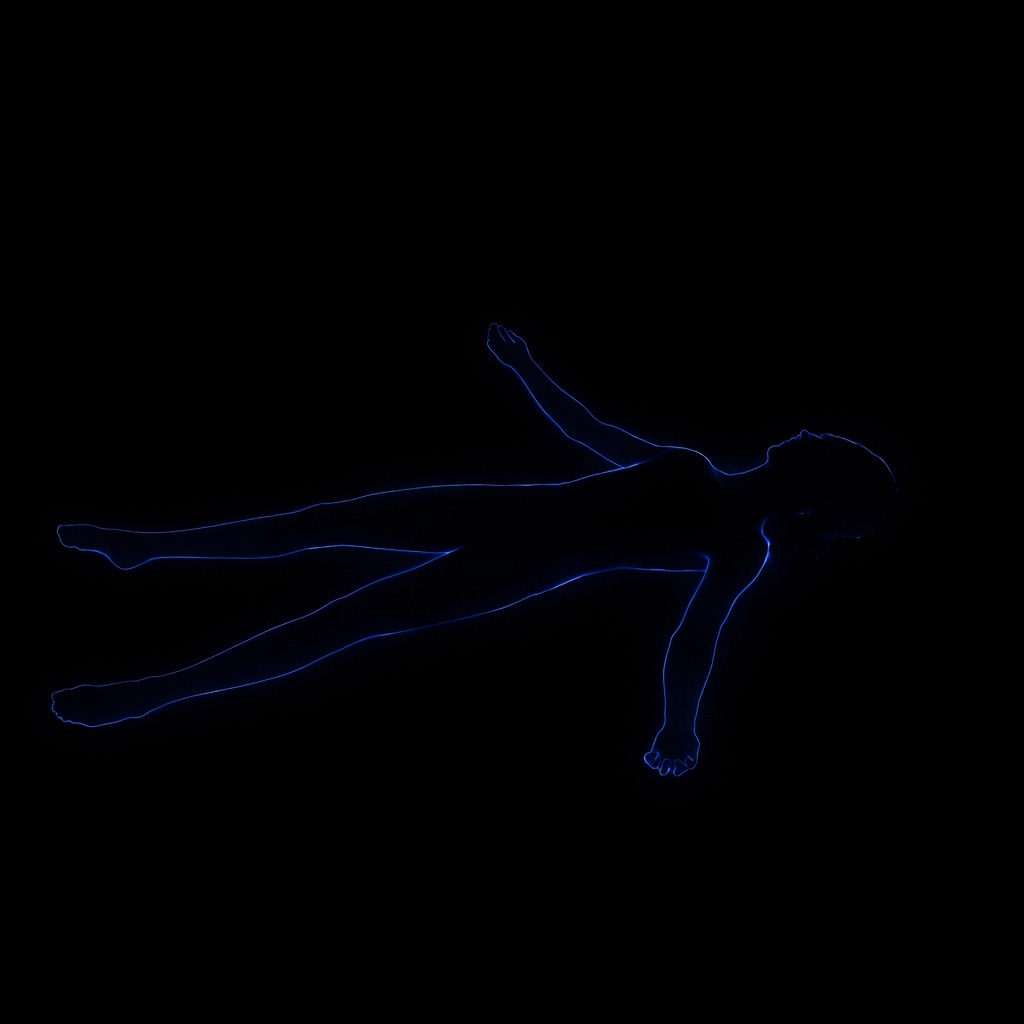
I entered the float tank alone, but discovered I was not as solitary as I imagined...
Yesterday, on vacation in Southport on the Gold Coast, I stepped into a float tank in the southern hemisphere.
The hallway was calm and inviting. The air was warm. The ordinary brightness of the day gave way to padded quiet and instructions spoken softly enough not to disturb the mood.
I noticed something immediately.
Before I even entered the water, a small part of me wanted the experience to be meaningful.
Not relaxing.
Not pleasant.
Meaningful.
It’s subtle, that reflex. The part that wants to harvest insight from every silence.
When I slipped into the water and the lights faded, the negotiation began.
The first few minutes were not transcendent. They were administrative. My body was still orienting. My jaw carried a trace of tension. My head floated but did not fully trust the buoyancy.
Floating, it turns out, is not the same as surrender.
I had entered alone. No voice. No eye contact. No shared breath.
And yet something unexpected surfaced in the dark.
The body I floated in was not solitary.
It had been shaped by relationship.
Regulated by others.
Calmed by tone and presence and hands and phrases that once meant safety.
You cannot float outside of that history.
Co-regulation is often described as something that happens between people. A mother and child. Two partners. A friend who steadies your nervous system with their voice.
But in the tank, there was no one.
Or so I thought.
As the water began to hold me more completely, I realized that what I was experiencing was not isolation, but internalized relationship.
The nervous system does not need a person present.
It needs the felt sense of safety.
And that felt sense was learned somewhere.
In the dark, a sentence arose quietly:
I am here.
I love you.
And I am listening.
There was no one else in the pod.
And yet the words were relational.
They were not self-talk in the motivational sense.
They were a reminder that presence can be carried.
That safety can be practiced inwardly.
The water did not speak. It did not guide. It did not interpret.
It held.
And in that holding, something softened.
Not dramatically.
Not epiphanically.
Just enough.
The part of me that wanted to extract meaning loosened. The part that wanted to “arrive” somewhere stopped striving. The body, upside down from my usual northern sky, seemed to understand something the mind did not need to analyze.
Perhaps co-regulation is not proximity.
Perhaps it is participation.
At that same hour, somewhere else in the world, another body was floating.
Another nervous system choosing to soften.
We did not know each other. We were not connected by sight or speech. But we were participating in the same act: releasing vigilance, even briefly.
There is something quietly radical about that.
In a world that runs on agitation, each regulated nervous system becomes a stabilizing presence.
Float tanks are not escape pods. They are repair rooms.
You enter alone.
You leave slightly less reactive.
That difference touches every conversation you return to.
In the dark, I began to sense that co-regulation extends beyond direct contact.
When you soften, you are not softening only for yourself.
You are altering how you will stand, speak, and respond when you re-enter the world.
The phrase returned again, slower this time.
I am here.
I love you.
And I am listening.
Listening to what?
To the body.
To the subtle tremor beneath the surface.
To the places still bracing.
The float did not remove my edges.
It revealed where I was still holding them.
And in the revealing, there was no judgment.
Just water.
Just buoyancy.
Just the steady message of being held without demand.
Nothing profound happened.
And that may be the most profound part.
When the light re-entered, I did not rush to interpret the experience. I showered and dressed slowly. The hallway felt different — not because it had changed, but because I had.
The insight was not grand.
It was relational.
Even alone in a darkness, I am not an isolated self.
I am a being shaped by connection, capable of carrying safety inward, capable of extending it outward.
Co-regulation is not only something we receive.
It is something we become.
Perhaps that is what the water was teaching.
Not how to transcend.
Not how to optimize.
Not how to escape.
But how to participate.
To float alone and know you are still within a field.
To whisper inwardly, even in silence:
I am here.
I love you.
And I am listening.
And to trust that this quiet practice, repeated across bodies, across cities, across hemispheres; matters more than we realize.
Author’s Note:
The reflection on co-regulation in this essay was inspired by the work of Caitlin McColl 🇨🇦 here on Substack.
We’re often told that “self-care” is a solo sport — a bath, a walk, a private moment of peace.
But in psychology, co-regulation describes how our nervous systems settle most reliably in the presence of a safe other.
Oh, this is so special, Richard. Thank you for sharing your experience. I like your observation that ‘nothing profound happened’ , but perhaps that is what was so profound’. How long were you in the isolation tank? I watched a video where a doctor was telling about her learned experiences and what she discovered was that our thoughts are not contained within the brain. That they are actually coming out and operating like a WiFi. Broadcasting.
🙏🙏